Short answer: Attach your photo and describe the object you want, not a studio's style: "a soft clay figure, matte polymer clay with soft rounded edges and faint thumbprints, the head about as large as the whole body". Add what must stay recognisable (face shape, skin tone, hair, the colours of your clothes), the light and backdrop of a product photo, and the aspect ratio.
The 3D cartoon version of yourself is one of the most shared AI pictures, and one of the most generic: a smooth face with big eyes that could be anyone. What makes it yours is the hair, the glasses, the jacket you always wear. And what makes it look like a real object instead of a filter is the material: clay with fingerprints, vinyl with a sheen, fabric with seams.
How do you keep the figure recognisable?
Say what carries over, in the material you chose. The gallery's prompts use the same line for every style:
Then add what matters for that material: "keep the hair shape, the wardrobe colours and any distinctive feature, simplified into clay rather than lost." A photo where your hair and clothes are clearly visible gives the model more to keep than a close-up of the face.
3D cartoon and toy prompts to copy
All of these are in Prompt Gallery, written for a reference photo. The short ones end with Midjourney's --ar 1:1; in ChatGPT or Gemini write "Square 1:1" instead.
3D animated film character:
Charming 3D animated feature-film style character of the subject from the reference photo, big expressive eyes, soft subsurface skin shading, cinematic studio lighting, warm colour palette, polished family-animation render. Keep it original: do not depict any celebrity or real public figure other than the subject of the reference photo, and do not copy any existing painting, artwork, film or game character, mascot, logo or trademarked design. --ar 1:1Soft clay figure (Nano Banana, Flux, Midjourney, Seedream):
Sculpt the subject from the reference photo as a soft clay figure.

Material: matte polymer clay with soft rounded edges and faint thumbprints. Proportions: exaggerated chibi proportions, the head about as large as the whole body, tiny arms and legs. Count: a single figure, centred.

Identity: Keep the subject recognisable from the reference photo: the same face shape, skin tone and hair, translated into this style; the figure must still be recognisable as this person: keep the hair shape, the wardrobe colours and any distinctive feature, simplified into clay rather than lost.

Craft: the surface should look hand-made, with slight asymmetry, gentle fingerprints and soft seams. Not a machine-perfect 3D render.

Look: soft diffused daylight from a large window, against a seamless studio paper backdrop, shallow depth of field, believable contact shadow under the figure.

Output: square 1:1 framing, sharp, high detail on the surface texture.

Keep it original: do not depict any celebrity or real public figure other than the subject of the reference photo, and do not copy any existing painting, artwork, film or game character, mascot, logo or trademarked design.Vinyl designer toy:
Collectible vinyl designer toy of the person from the reference photo, keeping their hairstyle and outfit, oversized head, glossy matte plastic finish, simplified stylized features, clean product-studio lighting, soft shadows. Keep it original: do not depict any celebrity or real public figure other than the subject of the reference photo, and do not copy any existing painting, artwork, film or game character, mascot, logo or trademarked design. --ar 1:1Brick figures:
Rebuild the subject from the reference photo out of interlocking plastic construction bricks.

Construction: a full brick sculpture with visible studs, seams and stepped edges, small fine bricks allowing curved forms and facial detail. Count: exactly three brick figures of the same person standing in a row, each in a different pose.

Material: real injection-moulded plastic with a slight sheen, visible mould seams, sharp corners and tiny surface scuffs. Every form must be made of discrete bricks, not smooth sculpted plastic pretending to be bricks.

Identity: Keep the subject recognisable from the reference photo: the same face shape, skin tone and hair, translated into this style; keep the hair shape and colour, the wardrobe colours and any distinctive feature, translated into brick colours.

Look: clean three-point studio lighting with a soft key, a straight eye-level angle, against a seamless studio paper backdrop, believable contact shadow.

Output: horizontal 3:2 framing, sharp, high detail on the stud texture.

Keep it original: do not depict any celebrity or real public figure other than the subject of the reference photo, and do not copy any existing painting, artwork, film or game character, mascot, logo or trademarked design.The gallery also has plush toys, claymation, inflatable balloon figures, low poly, voxel, a marble statue and an isometric diorama, each with its result.
Why do material words work better than style names?
Because a material tells the model how every surface should look. A famous studio's name or "claymation" calls up a vague memory of many films; "matte polymer clay with soft rounded edges and faint thumbprints" describes one surface, light and all. It also keeps your picture your own instead of an imitation of someone's film, which is why each gallery prompt ends with a line asking not to copy any existing character.
How do you get several figures that match?
Ask for an exact count and say they are the same person, then check the result. The brick prompt above asks for "exactly three brick figures of the same person", and the three match. The gallery's plush prompt asks the same, and its result shows how a model can still slip:
If the outfits must match, name them: "all three wear the same red jacket over a white T-shirt and blue jeans". Anything you leave open, the model may decide differently for each figure.
Can you do this with someone else's photo?
With their permission. A toy version is still recognisably them. For a gift, a family or a team, use one photo per person and describe who stands where.
Where can you check this?
Where can you find more 3D and toy prompts?
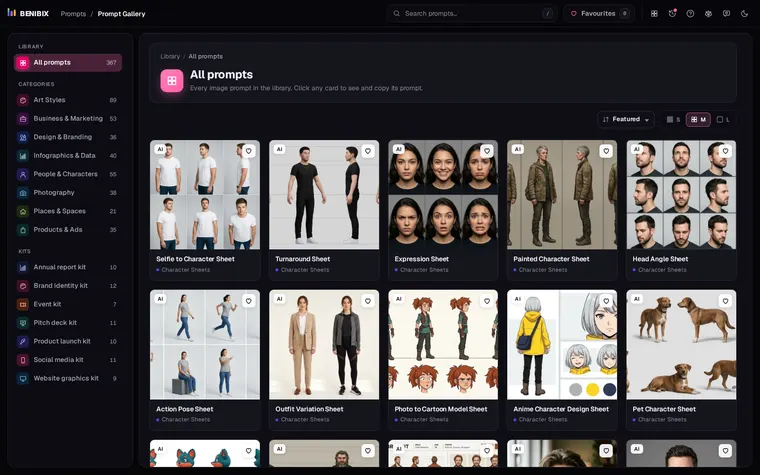
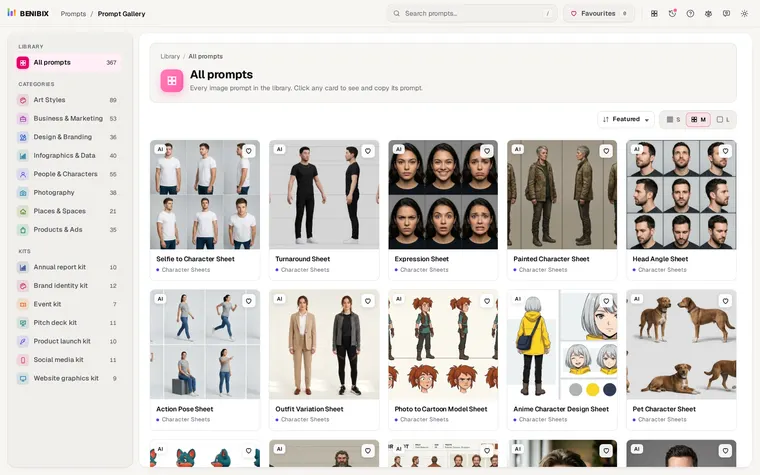
Prompt Gallery has 10 toy and clay styles with their results, from clay and vinyl to bricks and porcelain, and 3D Render has 10 more, from voxel and marble to a hyperreal CG render. Open one and use Customize to add your details and pick one of five aspect ratios before you copy it.