Short answer: Yes, Claude Fable 5.2 is better than Fable 5.1, and cheaper. It costs $8 per million input tokens and $40 per million output tokens (5.1 cost $10 and $50), and it scores higher than 5.1 on every benchmark in Anthropic's announcement. The biggest jump is real remote work: the Remote Labor Index goes from 17.9% to 41.3%.
Fable 5.1 came out in September, so a new Fable two months later raises the usual questions: is it really better, does it cost more, and should you switch from Opus 5.5? This post puts the two versions side by side, number by number.
Checked against Anthropic's announcements for Fable 5.2 (9 November 2026) and Fable 5.1, read on 10 November 2026. In a hurry? The Short gives the headline numbers in under a minute.
What did Anthropic release on 9 November?
Two names, one model. Claude Fable 5.2 is for everyone, with strong safeguards for cybersecurity and biology. Claude Mythos 5.2 is the same model with fewer of those safeguards, only for vetted organizations in cyber and life sciences. It is the same split as 5.1.
On the API the model name is claude-fable-5-2. It runs on the Claude Platform, Amazon Web Services, Google Cloud and Microsoft Azure.
How much does Claude Fable 5.2 cost?
| Input, per million tokens | Output, per million tokens | |
|---|---|---|
| Fable 5.1 | $10 | $50 |
| Fable 5.2 | $8 | $40 |
| Fable 5.2, fast mode | $16 | $80 |
That is 20% less on every token. Fable 5.1 kept the price of the version before it and saved you money another way: cache reads cost 75% less ($0.25 per million tokens). Fable 5.2 makes each token cheaper. Fast mode costs double and is offered in Claude Code, the Claude Platform, Google Cloud and Microsoft Foundry.
How do Fable 5.2 and 5.1 compare on benchmarks?
| Test | What it measures | Fable 5.1 | Fable 5.2 | Best other model on the page |
|---|---|---|---|---|
| FrontierCode 2.0 | Agents writing hard code | 32.4% | 49.1% | Opus 5.5, 45.5% |
| FrontierSWE v2 | Software engineering tasks | 56.3% | 69.9% | GPT-6 Astra, 65.5% |
| Remote Labor Index | Real remote jobs, finished | 17.9% | 41.3% | Opus 5.5, 21.3% |
| AutomationBench | Business workflows | 31.4% | 51.4% | Gemini 4 Carbon, 53.9% |
| OSWorld 2.1 | Using a computer like a person | 83.5% | 89.3% | Opus 5.5, 87.2% |
| AA-Briefcase v1.1 | Office work | 61.5% | 66.1% | Gemini 4 Carbon, 61.8% |
| Humanity's Last Exam, with tools | Expert knowledge | 65.6% | 74.2% | Opus 5.5, 67.7% |
| Terminal-Bench-Science 0.1 | Science work in a terminal | 52.6% | 74.6% | GPT-6 Astra, 68.1% |
| Chartography, no tools | Reading charts | 44.8% | 73.4% | Gemini 4 Carbon, 72.5% |
| RoboDojo Sim | Robotics in simulation | 27.6% | 64.9% | Opus 5.5, 39.4% |
| BenchCAD 2.1, max effort | Hardware design | 44.4 | 83.5 | Opus 5.5, 65.3 |
Fable 5.2 beats 5.1 on every line. It is not first everywhere: on AutomationBench Gemini 4 Carbon is still ahead, and on Chartography it is less than a point behind. The FrontierCode and Remote Labor Index scores for Fable were run at a high effort level (xhigh and high).
What changed in effort?
Fable 5.2 runs at medium effort by default, in the Claude apps and in Claude Code. Fable 5.1 defaulted to high in Claude Code. So out of the box, 5.2 thinks a little less per answer and uses fewer tokens, and you can still raise the effort for a hard task. Claude Code model and effort shows how to switch both with /model.
Does Fable 5.2 refuse less?
Yes. Compared with Fable 5.1, its safety classifiers block about 55% less often overall: about 60% less in cybersecurity and about 40% less in biology. Work that needs the safeguards off entirely is what Mythos 5.2 is for, through Anthropic's verification programs.
What has Fable 5.2 done that 5.1 could not?
Anthropic names two results from long runs:
- Fermat's Last Theorem, formalized. A team of 1,000 Fable 5.2 agents formalized the full proof in about 30 hours. Opus 5.5, with the same setup, finished 26% in 18 hours and barely moved after 30.
- Two open black hole problems. It finished a calculation laid out in 2003 but too laborious to complete, and found the exact limit of a technique used for more than 15 years to rule out quantum gravity theories in a simplified universe.
Should you use Fable 5.2 or Opus 5.5?
Anthropic's own advice: start with Opus 5.5 for most coding and knowledge work, as the strongest daily driver. Move up to Fable 5.2 for the most ambitious, open-ended technical work, and down to Sonnet 5.5 or Haiku 5.5 for smaller jobs. With the lower price, Fable is easier to justify for a long task than it was at 5.1's price. Try it on your own work before you switch the default, since a benchmark is never your project.
Where can you check this?
- Anthropic: Claude Fable and Mythos 5.2, the prices, benchmarks, effort default, refusal numbers and model advice
- Anthropic: Claude Fable and Mythos 5.1, the 5.1 prices and its high effort default
- Anthropic: Claude Fable 5.2 and Mythos 5.2 system card, the safety audit
- Anthropic: Formalizing Fermat's Last Theorem
- Claude docs: models overview, the model names
Can you make Fable your default in Claude Code in one place?
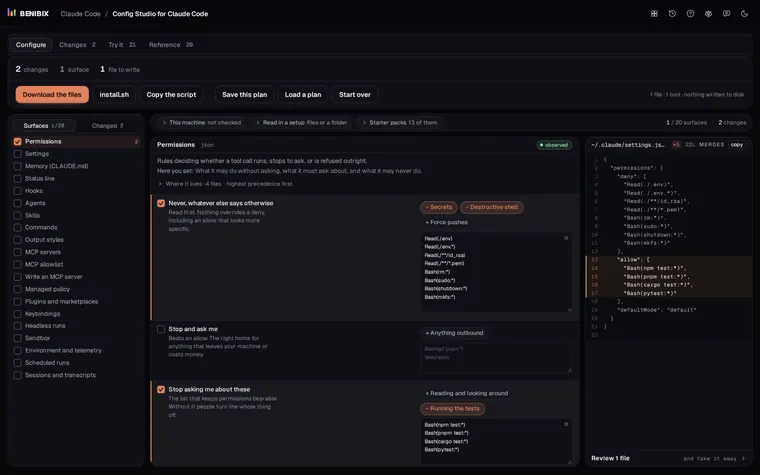
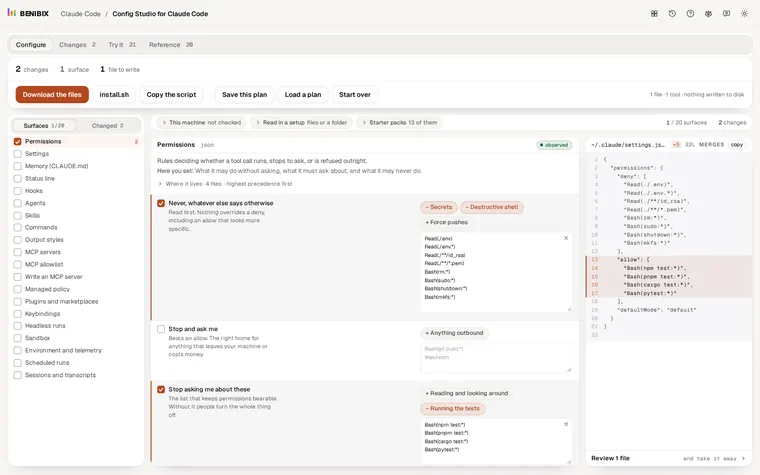
Config Studio for Claude Code sets the default model and effort, the highest effort allowed and the models people may pick, each explained, and writes the settings file for you. Pick Fable for the long jobs and keep a lower effort for the quick ones; nothing changes on your computer until you run its install script yourself.