Short answer: Attach your photo and describe the cover like a designer would: the shot ("from the chest up, looking directly down the lens"), the light, two colours, and every line of text in quotes with its place ("the masthead "FORGE" across the top", "the main cover line in the lower third"). Ask for "type crisp, correctly kerned, flat on the image plane". Invent the magazine's name: a real masthead is someone's trademark.
A cover is the most "designed" picture you can ask an image model for: a person, a background, and three or four kinds of type that all have to sit right. The models are now good enough at short, big text that a cover can come out finished. Small text is still a gamble, and the choice you make about it shapes the whole prompt.
Should the AI set the text, or should you?
| Approach | Prompt says | Good for | Watch out for |
|---|---|---|---|
| The AI sets the type | Every line in quotes, with its place and size | A fun, finished picture to share | Small text: tiny lines come out as nonsense |
| You set the type later | "Add no text, no lettering", plus where to leave space | A real book cover, a print, anything with your actual title | You need a design app for the type |
The fashion cover and the movie poster below let the model set the type; the book cover and the Y2K cover leave the space empty.
Cover prompts to copy
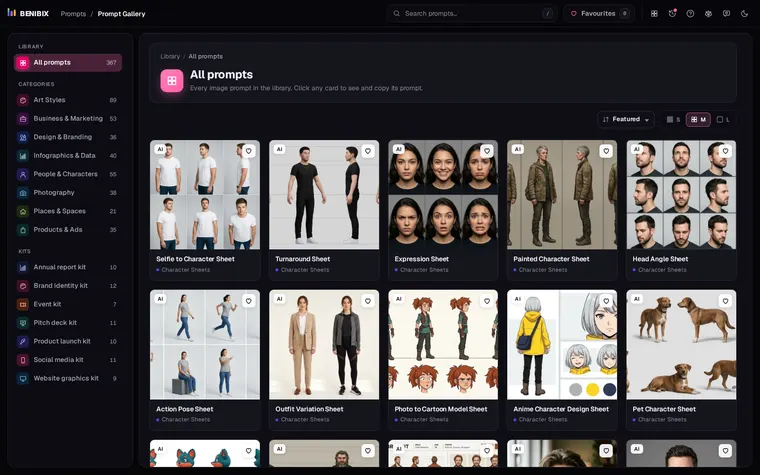
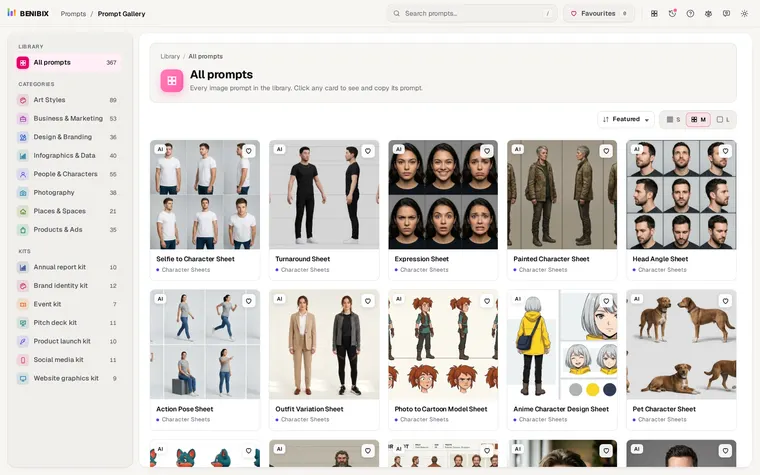
All four are in Prompt Gallery, written for a reference photo: attach a photo of the person and paste the prompt.
Fashion magazine cover (Midjourney, Flux, Nano Banana):
A high-gloss fashion magazine cover featuring the subject from the reference photo, shot as a full-bleed vertical cover photograph.

Preserve the subject's face, bone structure, hairstyle, and identity exactly as they appear in the reference image. Do not restyle the face.

The subject is photographed from the chest up, looking directly down the lens with a still, self-possessed expression. Styling is elevated and simple: sculptural tailoring, no busy patterns, one strong accessory. Hair and skin are lit like a beauty shoot, with soft key light from the front and a subtle rim light separating the subject from the backdrop.

Colour palette: warm ivory and deep oxblood. The backdrop is a plain studio sweep in a tone that flatters the subject rather than competing with them.

Typography, laid over the photograph like a real newsstand cover:
- The masthead "FORGE" across the top in a large, elegant serif, partially overlapped by the subject's head so the title sits behind them.
- The main cover line "THE FACE OF THE YEAR" set in the lower third.
- The issue line "SEPTEMBER · THE ORIGINALS ISSUE" as small caps near the masthead.
- Two or three short secondary cover lines stacked along the left edge.
- A small barcode in the bottom corner.

Type must be crisp, correctly kerned, and flat on the image plane. No warping, no 3D text, no lens flare.

Style: contemporary fashion editorial, medium-format digital, natural skin texture retained, photorealistic, 8K, vertical 4:5.

Keep it original: do not depict any celebrity or real public figure other than the subject of the reference photo, and do not copy any existing painting, artwork, film or game character, mascot, logo or trademarked design.Action movie poster (Midjourney, Flux, Nano Banana):
A photorealistic one-sheet movie poster for a gritty action thriller, starring the subject from the reference photo as the lead.

The subject dominates the poster in a dramatic hero pose, faithful to the reference image, lit with strong cinematic key and rim light against an epic graphic backdrop suggesting the film's world. Atmospheric haze, embers, or rain add drama.

Poster layout, printed and legible:
- The film title "THE RECKONING" in a huge, weighty cinematic typeface across the lower third.
- The tagline "ONE CHOICE CHANGES EVERYTHING" in smaller caps above the title.
- "IN THEATERS THIS SUMMER" at the very bottom.
- A full "billing block" of tiny condensed credits text and studio logos along the bottom edge.
- A couple of laurel award leaves in a corner.

High-contrast blockbuster colour grade, glossy print finish, dramatic composition. Photorealistic, ultra detailed, 8K, portrait 2:3.

Keep it original: do not depict any celebrity or real public figure other than the subject of the reference photo, and do not copy any existing painting, artwork, film or game character, mascot, logo or trademarked design.Book cover (Midjourney, Flux, Firefly, Ideogram). Here the type is set later, so the prompt only keeps room for it:
Design a book cover for a novel about a lighthouse keeper who starts receiving letters from the sea, featuring the subject from the reference photo.

Genre: restrained literary fiction: one strong symbolic image, lots of flat space. Show the lighthouse and the sea, with the subject small in the scene as the keeper. Rendered digital oil painting, visible brush strokes, warm earthy palette, terracotta and sand.

Layout: the upper third kept clear and quiet for a title. Compose for a 6×9 jacket: keep the focal subject clear of the outer 8% on every edge, and leave the bottom clear enough for an author name.

Identity: Keep the subject recognisable from the reference photo: the same face shape, skin tone and hair, translated into this style, though the character may be silhouetted or partly obscured if the genre calls for it.

Add no text, no lettering, no title and no author name anywhere in the image. Type is set later.

Output: a painting, not a photograph. Vertical 4:5 framing, print resolution, no watermark.

Keep it original: do not depict any celebrity or real public figure other than the subject of the reference photo, and do not copy any existing painting, artwork, film or game character, mascot, logo or trademarked design.Y2K magazine cover (Midjourney, Flux, Ideogram, Firefly):
Design a magazine cover starring the subject from the reference photo.

Subject: full length, head to feet in frame, a confident hero pose with hands on hips, cut out cleanly and layered over the cover graphics.

Styling: early-2000s Y2K styling: chrome shapes, butterflies, bubble forms, lens flares, dense decorative clutter: stickers, hearts, sparkles and shapes crowding the subject, bold saturated primary colours.

Layout: leave the top strip and one lower corner as quiet flat areas where a masthead and cover lines could be set later. Add no text, no lettering, no numbers and no logos anywhere in the image.

Identity: Keep the subject recognisable from the reference photo: the same face shape, skin tone and hair, translated into this style.

Look: hard direct on-camera flash with a crisp shadow, high contrast, glossy print finish.

Output: vertical 4:5 framing, print quality, crisp edges.

Keep it original: do not depict any celebrity or real public figure other than the subject of the reference photo, and do not copy any existing painting, artwork, film or game character, mascot, logo or trademarked design.How do you keep the face right on a cover?
Say it twice, in two ways: once as an instruction ("preserve the subject's face, bone structure, hairstyle, and identity exactly as they appear in the reference image") and once as a ban ("do not restyle the face"). A cover invites the model to glamorise; without the ban it smooths and reshapes faces toward a generic model look. For an illustrated cover, ask for "the same face shape, skin tone and hair, translated into this style" instead.
Can you use a real magazine's name?
No. Magazine mastheads, film studio logos and book publishers' marks are trademarks, and a cover that looks like a real issue of a real magazine can mislead people. Invent the name, as the prompts above do ("FORGE", "THE RECKONING"), and do not put real people other than yourself, or people who agreed, on a cover meant to be shared.
Where can you check this?
Where can you find more cover and poster prompts?
Prompt Gallery has these four with their results, and five concept covers for articles and reports, without a person, under Design. Open one and use Customize to add your details and pick one of five aspect ratios before you copy it.